

BLog
Plywood, MDF, Melamine, or Chipboard? A Cape Town DIYer’s Guide to Choosing the Right Board
Walk into any hardware store in Cape Town and you’ll find a wall of boards that all look vaguely similar but have very different names, very different prices, and very different specs. Choosing the wrong one is one of the fastest ways to turn a satisfying weekend project into an expensive lesson.
At TimBuild Woodstock, we sell boards to both professional cabinet makers building 30 kitchens a year as well as to first-time DIYers building their very first shelf. The question we hear most often is the same from both: “Which board should I use for this?”
Here’s the honest answer for each type.
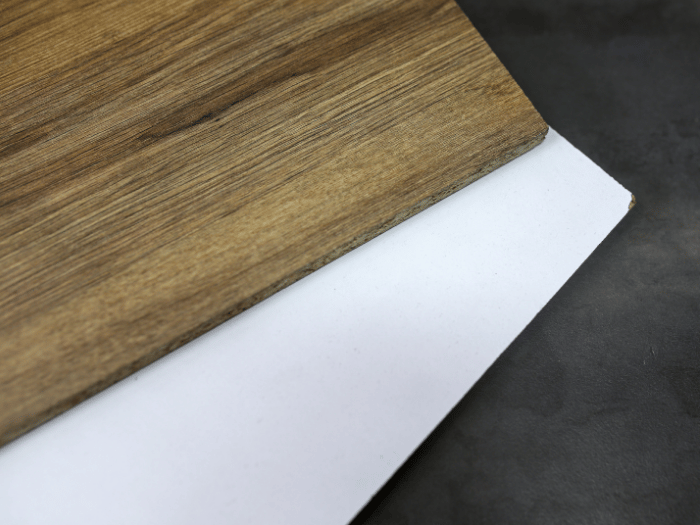
Melamine Board (MelaWood)
What it is
Chipboard with a factory-applied decorative surface. The melamine coating gives you a smooth, hard-wearing finish in a huge range of colours and textures, from plain white to wood-grain to high-gloss and ultra-matt. PG Bison’s MelaWood range (which we stock at TimBuild Woodstock) is the industry standard in South Africa.
Use it for
Kitchen cupboards, bedroom wardrobes, bathroom vanities (with lipped edges to protect from moisture), office desks, bookshelves, and any interior cabinetry. If the project lives indoors and needs a clean, finished look without painting, melamine is almost always the right choice.
Don’t use it for
Anything outdoors, anything that will get regularly wet, and anything structural. Melamine boards are chipboard underneath so if water gets into an exposed edge, the board swells and crumbles. Always seal cut edges with edging tape (which we apply in-store).
TimBuild tip
If you’re building kitchen cupboards, use our computer-generated cutting list service before buying. You give us the dimensions, we optimise the layout across sheets to minimise waste. On a standard kitchen, this can save you an entire sheet of board which is R600 to R900 back in your pocket.
Plywood
What it is
Thin layers of real wood veneer glued together with the grain alternating direction. This cross-lamination makes plywood strong in every direction, unlike solid wood, which is weak across the grain. Marine plywood uses waterproof glue, making it suitable for high-moisture environments.
Use it for
Structural work (subfloors, roof sheathing, formwork), furniture that needs to carry weight (shelving units, workbenches, table tops), bathroom and kitchen applications where moisture is a factor, and outdoor furniture when combined with proper sealing. Plywood is also the go-to for drawer bases and cabinet backs where strength matters more than appearance.
Don’t use it for
Visible surfaces where you want a perfectly smooth, consistent finish. Plywood edges are layered and need to be concealed with edging, filler, or trim. If the finished look matters more than structural strength, melamine or MDF is a better choice for the visible faces.
Choosing the right thickness
TimBuild Woodstock stocks marine plywood from 4mm to 21mm. As a rule of thumb: 4–6mm for drawer bottoms and cabinet backs, 9–12mm for shelving and general joinery, and 16–21mm for structural applications, worktops, and furniture that needs to carry serious weight.
MDF (Medium Density Fibreboard)
What it is
Wood fibres compressed with resin into a dense, perfectly smooth, uniform sheet. No grain, no knots, no voids. MDF machines beautifully — it routes cleanly, takes profiles well, and paints to a mirror-smooth finish. It’s the board you use when appearance after painting matters most.
Use it for
Painted cupboard doors, decorative panelling, skirting boards, cornices, display shelving, and any project where you want a flawless painted surface. MDF is also excellent for router work — the consistent density means clean, crisp edges on every pass.
Don’t use it for
Anything exposed to moisture (MDF absorbs water like a sponge and swells permanently), structural applications (it’s not as strong as plywood), or heavy-load shelving without adequate support. And always wear a dust mask when cutting MDF as the fine dust is not something you want in your lungs.
Chipboard (Particleboard)
What it is
Wood particles compressed with resin into a sheet. It’s the most affordable board material and the base layer underneath most melamine finishes. Raw chipboard (without a melamine coating) is plain, rough, and not particularly attractive, but it’s cheap and functional.
Use it for
Budget projects where the board will be concealed or covered: closet interiors, under-bench shelving, packing, substrate for countertops, or anywhere cost matters more than finish. It’s also useful as a temporary work surface or sacrificial board for your workshop bench.
Don’t use it for
Visible furniture surfaces, anything that will bear heavy loads over a span, and definitely nothing outdoors or in wet areas. Chipboard is the weakest and least moisture-resistant of all board types. If you need to save money on a furniture project, use chipboard for the hidden structural parts and melamine for the visible faces.
Quick Comparison: Which Board for Which Job?
| Board Type | Strength | Moisture | Finish | Cost | Best For |
| Melamine | Medium | Low | Excellent | RR | Kitchen cupboards, wardrobes, desks |
| Plywood | High | High | Moderate | RRR | Structural, bathrooms, shelving |
| MDF | Medium | Very Low | Superior | RR | Painted doors, panelling, profiles |
| Chipboard | Low | Very Low | Poor | R | Budget projects, concealed areas |
Still Not Sure? Just Ask
The honest truth is that most DIYers don’t need to become board experts. You just need to tell us what you’re building and where it’s going, and we’ll point you to the right material. That’s what we’ve been doing at TimBuild Woodstock for years. It is our mission to help Cape Town homeowners, cabinet makers, and contractors pick the right board, cut it to the right size, edge it properly, and get it delivered without drama.
Visit us on the corner of Fairview Avenue and Victoria Road in Woodstock, call 021 447 4075, or send us an email on info@timbuildwoodstock.co.za